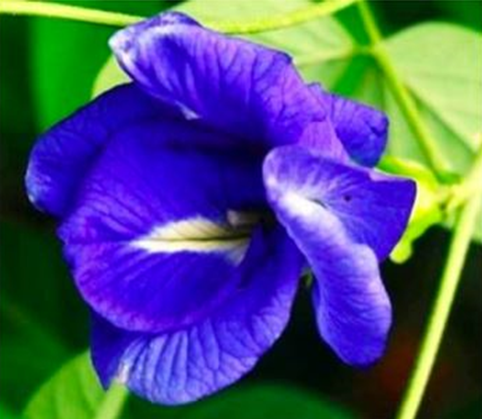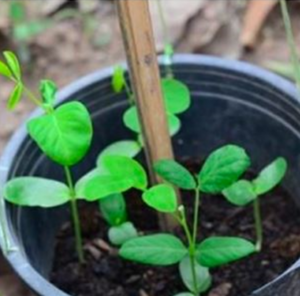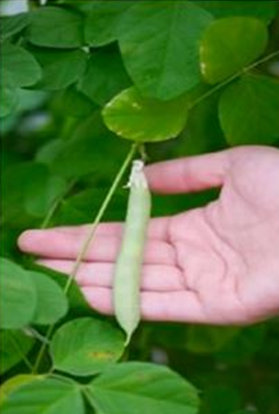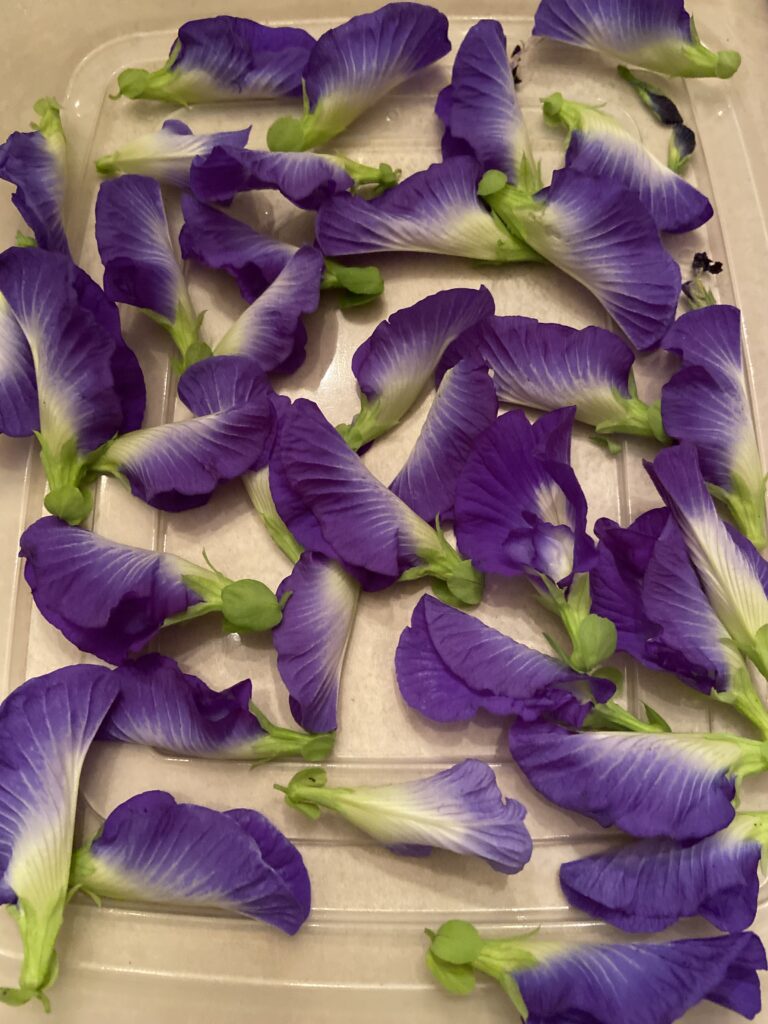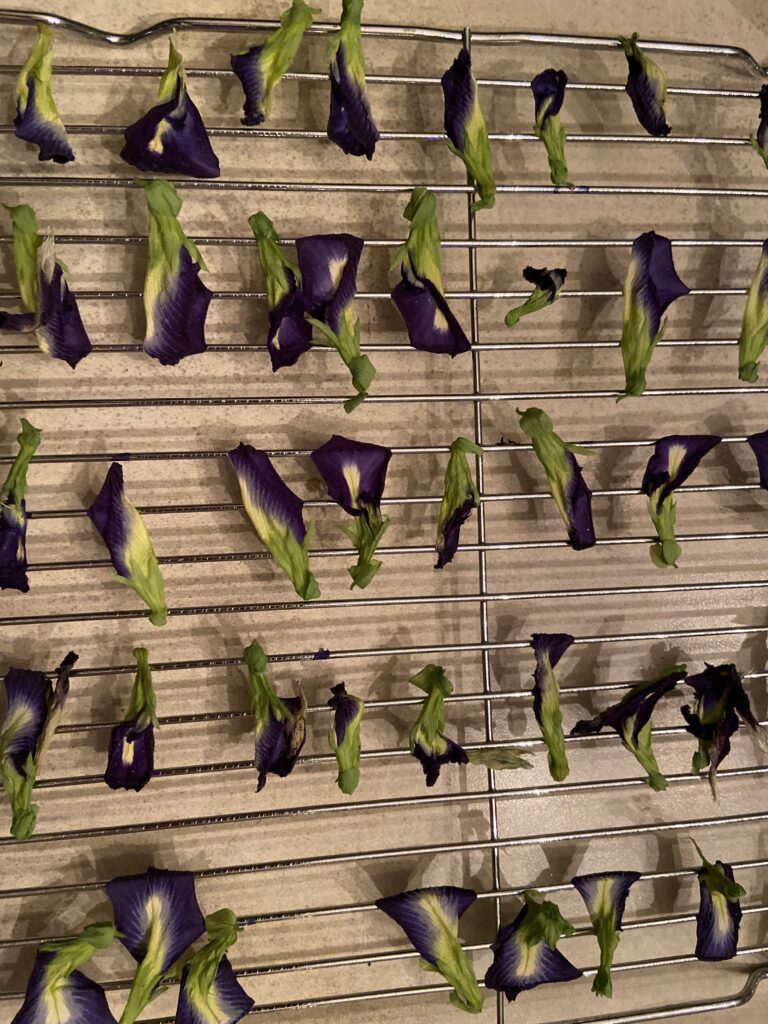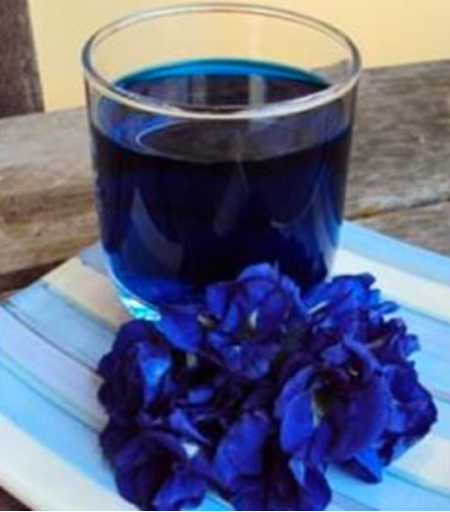
Butterfly Pea Clitoria ternatea Fabaceae (Legume or bean family)
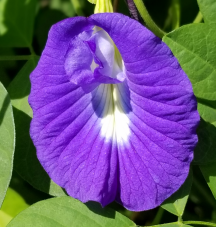
• Growing tip The butterfly pea flower vine thrives in warm, tropical climates, but can also be successfully grown in cooler regions. As it won’t survive a freeze, C. ternatea is usually grown as an annual or taken indoors during the winter. The vines are generally started from seeds, which are easy to collect in the fall. Soak them first in water for 12-24 hours and then scarify before planting. Seeds can either be direct-sown, or in cooler climates, started indoors and transplanted when the temperature reaches 60°F. Choose a location that gets 6-10 hours of bright, direct sun daily. Once the plants are established, they are relatively drought-tolerant but may need additional watering in prolonged dry spells.
• Culinary tip Other than adding the fresh flowers to a salad, the primary culinary use of C. ternatea is as a coloring agent. A deep blue tisane prepared from the flowers can be used to tint a variety of foods – from a traditional Malaysian rice dish, nasi kerabu, to ice cream and even sourdough bread. The blue color, due to the presence of specific anthocyanin pigments in C. ternatea, can also be modified by changing the pH of the tisane. As the infusion is made more acidic, by adding lemon juice, for example, the sapphire blue shifts to a deep purple, and eventually to a bright magenta. This color-changing capability has given rise to many popular beverages.
• Health Benefits Various combinations of C. ternatea roots, flowers, leaves, and seeds are used in Ayurvedic medicine to treat infections, fevers, and arthritis. Clinical research is lacking, but butterfly pea flower is also said to help patients suffering from depression, anxiety, and cognitive decline. Skin care products containing butterfly pea flower are claimed to lessen the signs of aging and to stimulate collagen synthesis.
• Folklore/Religion In Hinduism, the flowers of C. ternatea are offered in puja rituals (daily worship) to invoke purity, protection, and divine favor. In south India, pregnant women might wear the roots around their arms or waist to insure a safe delivery.
A True Blue Botanical Beverage –
Until it’s Purple…or Pink…or Green
Simple infusions of butterfly pea flowers preserve the original blue tint, but it is easy to manipulate the color. Depending on which ingredients are added to the infusion, the color can be changed from turquoise to indigo, purple, violet, magenta, or pink – or even to teal or forest green.
This wide range of color possibilities is due to the particular anthocyanin pigments in butterfly pea flowers, the most important one being delphinidin. Different combinations of over 600 anthocyanin pigments are what make roses red, blueberries blue, and eggplants purple.
All anthocyanins undergo chemical changes in response to changes in their environments. With fluctuations of pH (degree of acidity or alkalinity), for example, the associated change in anthocyanin structure affects which wavelengths of light are absorbed. We perceive this change as a shift in color.
When a butterfly pea flower infusion (tea, simple syrup, infused spirit, or reconstituted powder) is mixed with an acid such as lemon juice, vinegar, or tonic water, the altered delphinidin molecules absorb different wavelengths of light. The color we now perceive moves toward the red part of the spectrum. Depending on how much acid is added, the result could be indigo, purple, magenta, fuchsia, or, at the extreme, Barbie pink. If the infusion is made more alkaline – by the addition of saffron, for example – the color shifts toward teal, then to a deeper shade of conifer green, and finally yellow.
If more elaborate beverage experiences are desired, butterfly pea ice cubes can be added to an acidic beverage such as lemonade. As the ice melts the lemonade will slowly change to pink. You could also create a layered beverage by adjusting the sugar content of different components. The higher the sugar content, the denser the layer, so you could have a lower layer of butterfly pea syrup followed by crushed ice and topped off with a less dense unsweetened crimson Roselle tea. The possibilities are endless.
Besides being an entertaining demonstration of chemistry, color-changing beverages are the showpieces of every bartender’s repertoire.
And, of course, embellishing the dazzling drink with a vibrant edible flower is the perfect final touch!
Butterfly Pea Beverages Using C. ternatea Blooms
Lavender Infused Butterfly Pea Tea
- 1 gallon water
- 1⁄4 cup dried butterfly pea flowers = ~7-8 flowers per 1 cup water
- 2 fresh lavender sprigs (about 4-5” long) (optional)
Heat water in a large pot to approximately 180°F. Meanwhile, wash and gently pound lavender. Turn off heat. Stir in flowers and lavender. Cover and steep for 5 minutes. Place flowers in a small bowl (do not discard). Use a fine strainer or spoon to remove any small bits of floral matter. Transfer tea and lavender to an extra-large bowl to cool. Remove lavender after 20 min (earlier or later depending upon preference).
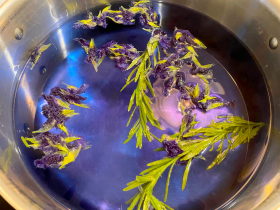
Lavender Infused Butterfly Pea Syrup
- 4 cups butterfly pea tea
- 4 cups refined sugar (do not use organic sugar)
- 1 Tbs fresh lavender
- Liquid from discarded butterfly pea flowers used to make tea
Dissolve sugar into butterfly pea tea in a medium pot. Bring to a simmer (do not boil), then turn off heat. Add lavender. Cover and steep for ~30 min according to personal preference. Remove lavender and let cool. Squeeze liquid out of the flowers used in making tea and add to the syrup for darker coloring.
Lavender Infused Refresher as a Mocktail or Cocktail
- 1 tsp syrup (or less)
- ice
- mineral water or vodka/gin
- mint, lemon, lime or fresh butterfly pea flowers for garnish
Add syrup and ice to small glass and top off with mineral water or alcohol. Add garnish of choice. Watch the show as you add citrus to the beverage. Enjoy.
Serve the tea as is or sweeten with the syrup. Honey tastes great with lavender, however, it can alter the color of the tea. The syrup can also be used in mocktails or cocktails. Consider infusing both rosemary and lavender to flavor the otherwise weak taste of butterfly tea.
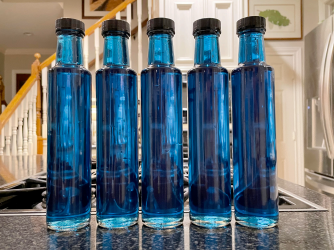
Submitted by Karen Cottingham and Virginia Camerlo